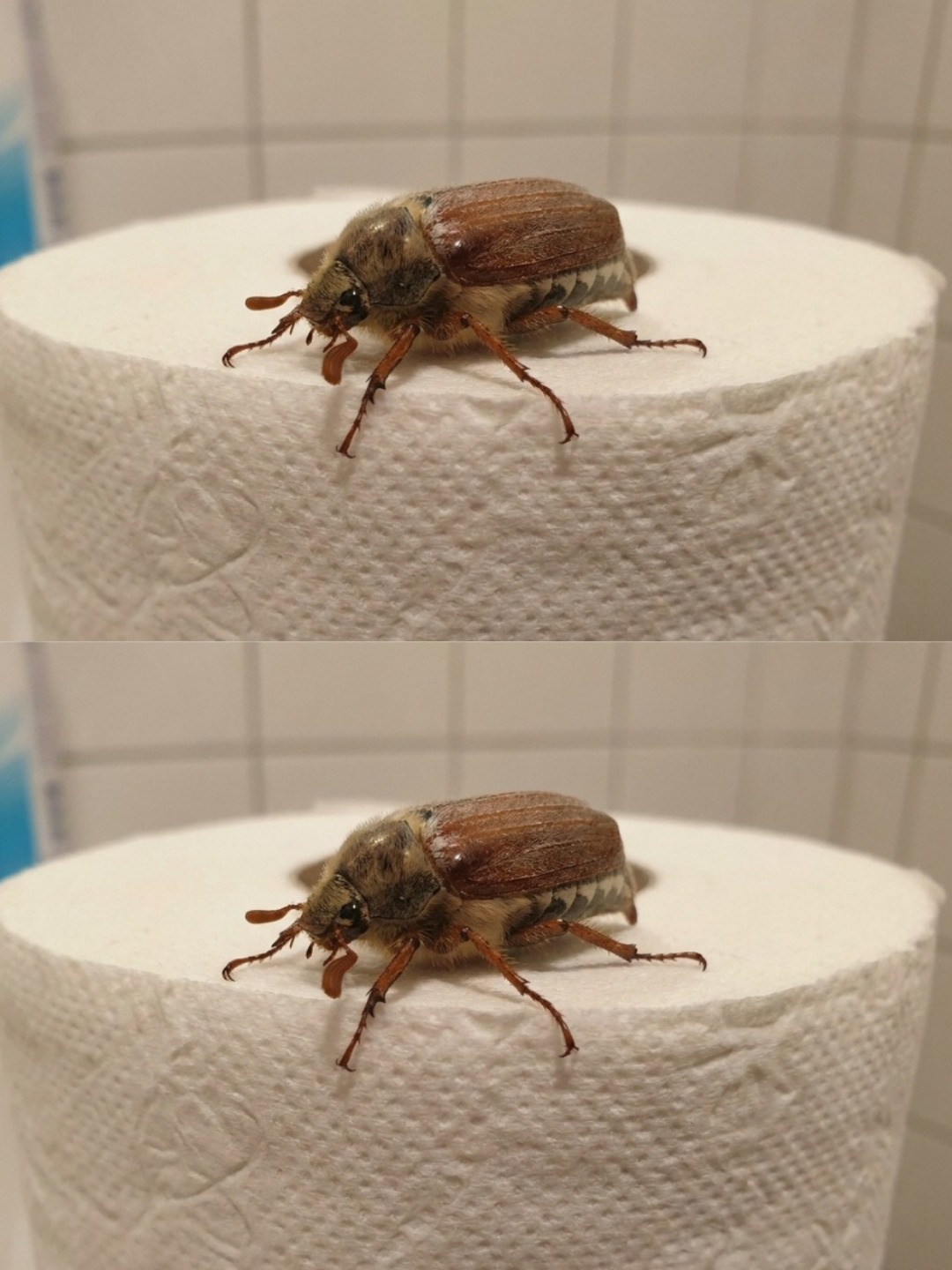
| Special feature | May beetle | June beetles |
|---|---|---|
| Size | Larger (1–1.5 inches / 25–35 mm) | Smaller (½–1 inch / 12–25 mm) |
| Color | Dark reddish-brown with a black head | Shiny, metallic greenish-brown |
| Movement | Clumsy, loud, bumps into things | Humming, unpredictable, but somewhat more agile |
| Active season | Late April to May (only 4-6 weeks) | Late May to June |
| Body shape | Sturdy, rather oval | Slightly slimmer |
The cockchafer is also much louder in flight – hence the disturbing “slapping” sound you heard. They are anything but graceful fliers.
 What to do if you find one (What you did exactly right)
You did that perfectly. Here are the simple step-by-step instructions:
1. Don’t panic! They can’t hurt you. Even if one lands on you, it will just crawl or try to fly away.
2. Turn off the bathroom light and close the door. The darkness will calm it down, and it will stop banging on surfaces.
3. Open a window (if possible) and turn on an outside light. The animal will fly towards the light and then fly away on its own. This is the gentlest method.
4. Alternatively, you can carefully catch it. Use a cup and a piece of sturdy paper or cardboard. Slide the paper under the cup, carry it outside, and release the animal on a tree or bush (not directly on the ground – it needs to be able to climb).
What you should NOT do:
-
Do not crush (that’s messy and unnecessary).
-
Please do not throw it down the toilet (it is alive and can survive in the pipes for a while – cruel and ineffective).
-
Do not spray it with insecticides in the bathroom (this is excessive and introduces chemicals into your living space).
 Will more may beetles be coming into the house?