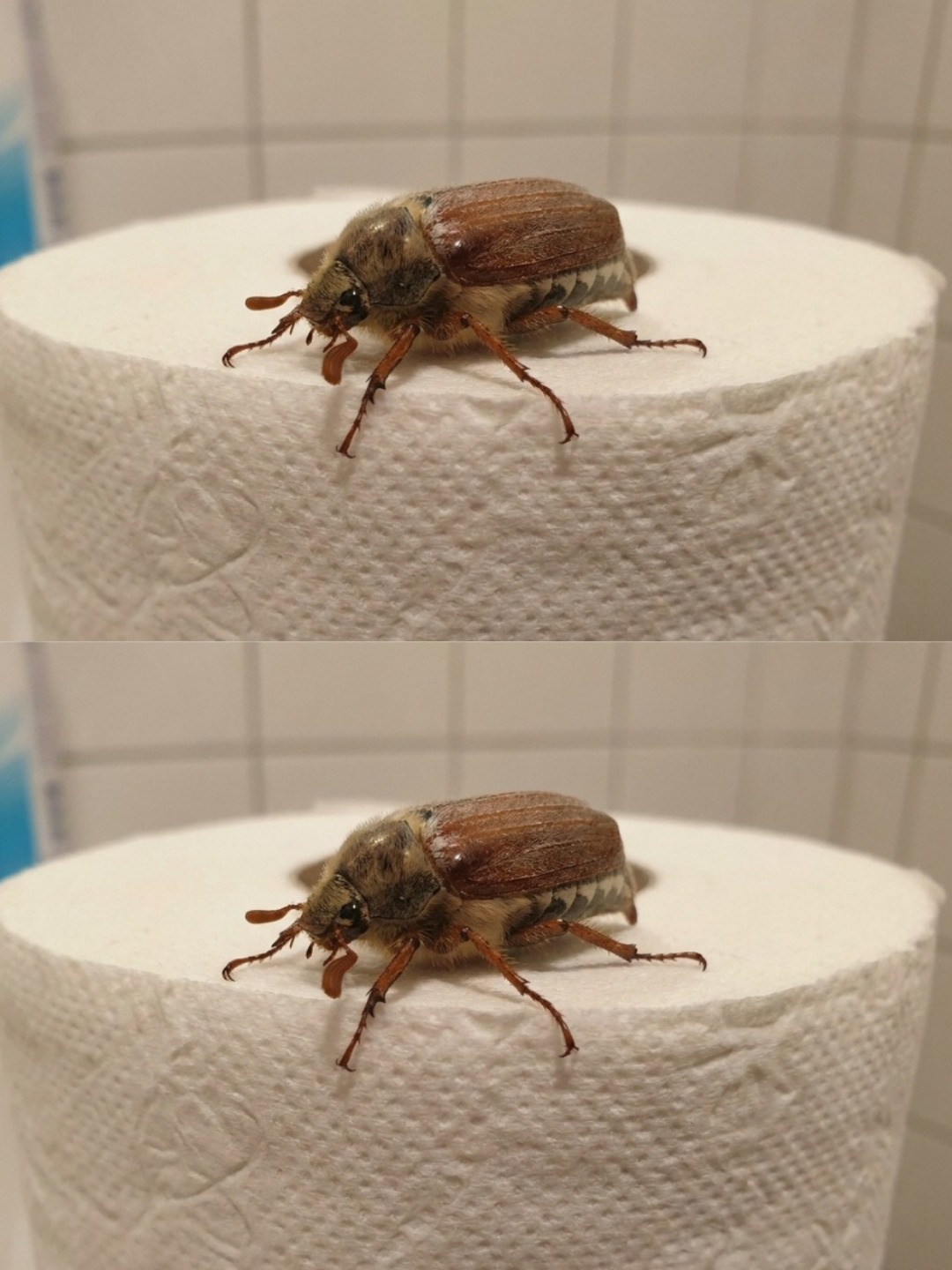
Probably not. The flight period of the adult moths is very short (4–6 weeks). You might find one or two more stragglers if you leave the bathroom light on at night with the windows open. However, they do not breed or nest in your house. For their larval stage, they need soil and plant roots, which your bathroom does not provide.
If you want to avoid future confusion among your visitors:
-
Keep bathroom windows closed or fitted with fly screens on May evenings.
-
For lights near open windows, use a lower wattage bulb or a yellow insect lamp.
-
During May beetle season, switch off unnecessary lights at night.
 Final note: May beetles are actually beneficial for the garden.
Adult cockchafers eat leaves (which can annoy gardeners). As larvae, however, they loosen the soil and decompose organic material. More importantly, they are a vital food source for bats, birds, and hedgehogs.
Their population collapsed in the 20th century due to pesticides. But they are slowly recovering, and many ecologists see this as a positive sign for biodiversity. So their nocturnal visitor wasn’t just a clumsy insect – it was a small indication that local ecosystems are recovering.
 Conclusion
| Ask | Answer |
|---|---|
| Is it dangerous? | No – safe for humans and animals. |
| Will it bite? | No – it has no interest in you. |
| Is my house infested with pests? | No – it was a single, lost adult. |
| Should I call a pest control service? | No – it is an insect that lives outdoors, not a pest. |
| What do I do? | Turn off the light, open a window, or carefully slide the object outside in your hand. |
You survived an encounter with a cockchafer. That’s not bad luck. It’s also not a sign of an unclean home. It’s simply one of nature’s clumsiest, loudest, and most harmless spring visitors that got lost and headed straight for your toothbrush.
And quite honestly? That’s a much better story than “I found a cockroach”.
If you see another one tonight, smile, turn off the light, and let it find its way back outside. You can do it!